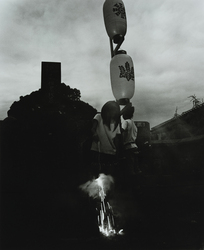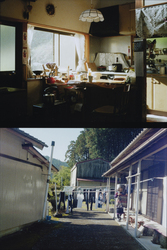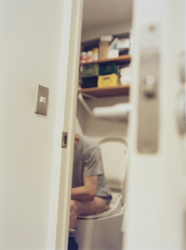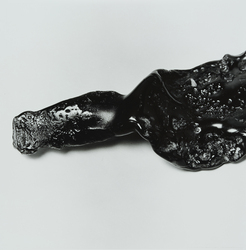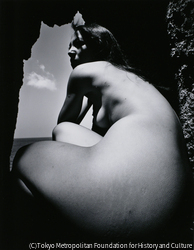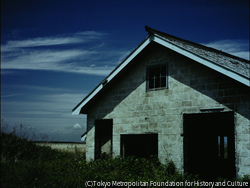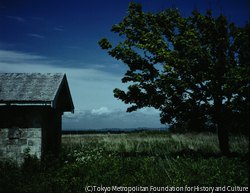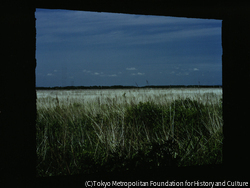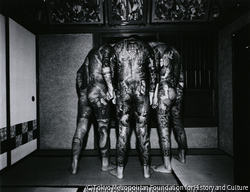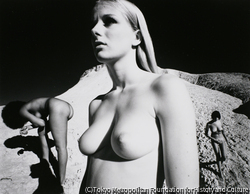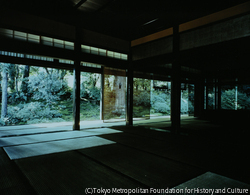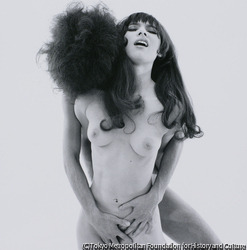
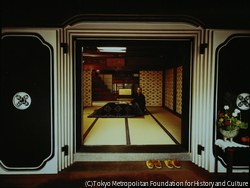
The House series was published in the monthly magazine Ushio from January 1972 to December 1975. The locations photographed stretch from Tomakomai, Hokkaido, in the north of Japan, to Taketomijima, Okinawa, far to the south. The subjects include historic building such as the Akasaka State Guest House and the site of the Imperial General Headquarters in Ichigaya, both in Tokyo. They actually cover, however, a much broader range, from residences in rural areas to the ruins of the Chikuho coal mine in northern Kyushu, apartment buildings in Tokyo, and tea houses in Kyoto. Shinoyama also focused not just on architectural style and structure; he made the traces of the people who had lived there impressively visible. With this series, Shinoyama was chosen as the artist to represent Japan at the 1976 Venice Biennale, with a solo exhibition in the Japan Pavilion. In October 1975, he presented the House series in a large-format photo book, Meaning of House, with a text by the critic Taki Koji, who had long been involved in both architecture and photography. Taki later revised that text and published it as The Lived House.
- Collection of
- Tokyo Photographic Art Museum
- Series title
- Meaning of the House
- Title
- Artist Name
- SHINOYAMA Kishin
- Year
- 1975
- Material / Technique
- Silver dye bleach print
- Dimensions
- 238x306mm
- Accession number
- 10019023
- Tokyo Photographic Art Museum “Search the Collection”
- https://collection.topmuseum.jp/Publish/detailPage/23369/